Pages

Monday, November 23, 2009

The unusual food


A Taiwanese traditional food "pig blood cake" was chosen by the UK travel website as the most unusual food in the world. I was thrilled when I noticed this news, how could a country have Haggis think "pig blood cake" weird? It said, and I quote, "pig blood cake is sold on a wooden stick and eaten like ice cream. Easily found at street market, it's a sweet treat generally made from pig's blood and rice."

Well, it is nothing like ice cream!!!
It is hot, salty, a little bit sweet and spicy, and absolutely delicious.

So, what would I do if I have to do a PR campaign to reintroduce this Taiwanese traditional food?

For this case, I think people were most likely been misguided by inappropriate interpretations. The so called "pig blood cake" is not a kind of cakes, nor is it a sweet dessert. Therefore, in order to introduce this food to the British people, it would be more appropriate to translate it into a name custom to the British people, such as "brown rice pudding", as which would remind people of something like "black pudding". In fact, the two are indeed alike!

With the proud of our food, a famous blogger in Taiwan already did a great PR job for it. He produced an introductory video to rebuild the reputation of the "brown rice pudding". This video is now all over the TV news broadcasted in Taiwan, it has also been sent to numerous Facebook members around the world for clarifying how the "brown rice pudding" really tastes like.

It should be noted that the aim of this PR campaign is not to sell or promote the "brown rice pudding". The primary purpose of this video is trying to eliminate, or at least to reduce, the bias information about this food delivered to the people who haven't gotten a chance to actually taste it.

The video was only on-line yesterday, yet I have already seen load of feeds on Facebook sharing it today. I believe the influence of which will be enormous through the bloggers, YouTube, and Facebook. This is another good example of the power of social media. Anyone who knows how to use internet social media can influence the world, and that is why PR should learn more about it.

READ MORE - The unusual food

Non-profit PR


A few blogs here have discussed the brand maintenance and corporate image functions that good PR practice can bring to a company in a competitive commercial marketplace. I would like to make comment on this issue of brand competition within the non-profit or charity sector.

It seems that charities can no longer rely on obtaining support from the public simply on the grounds that they are raising funds for ‘a good cause’. With so many organisations with varying but equally good causes, competition for public support is perhaps even more fierce than the commercial market place. Added to this, considering the tough financial climate, this competition will be even greater, with the public struggling to make ends meet for themselves before even considering donating to charity. The PR and fundraiser people within this sector have no doubt faced a tough year of brainstorming new strategies to obtain the public’s financial backing.

It is quite timely then that PRWeek and Third Sector have recently published research into this area of voluntary sector branding. Having conducted over 3,000 interviews with people to investigate awareness and trust of organisations within the charity sector, The Charity Brand Index 2009 has been published outlining the top 100 non-profit organisations in the eyes of the public. Surprisingly, it is the first study of its kind to provide evidence of the effectiveness of the PR work of these individual charities, coming as an indication that more focus is needed on developing communication work for non-profits.

The organisation ranked number 1, Macmillan Cancer Support, was reported as being highly familiar to the public, with their work being viewed in the most positive light over other charities including the various other cancer charities such as Cancer Research and Marie Curie Cancer Care. Macmillan have in fact revolutionised their communications teams UK wide in the past year, now operating with 11 communication staff in total across all avenues through which the charity works. Having developed strong new media channels on Facebook and Twitter has also helped to improve the charities public image and overall presence within the crowded non-profit market, inevitably granting them more support.

As the non-profit sector continues to grow and be increasingly viewed in terms of a competitive marketplace I believe the communication work of these organisations will only become more important. As the publication of this report indicates, it is a growing area of PR that cries for more research and hopefully exciting employment opportunities!
READ MORE - Non-profit PR

When a scandal causes a crisis….

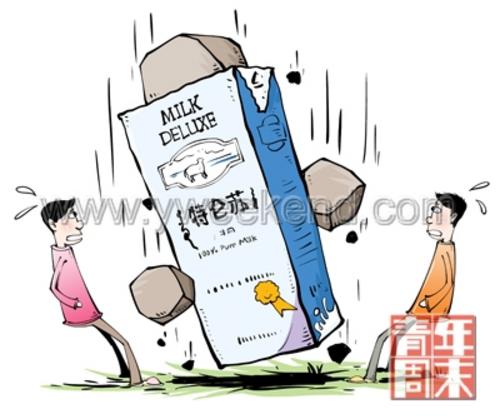
In 2008, China was over-shadowed by the scandal of dairy products(Timeline of the 2008 Chinese milk scandal). Since the notorious issue of the Sanlu Group’s tainted milk powder was revealed in February, which was proven to be responsible for killing at least six infants and sickening nearly 300,000 others, the Chinese government began to put more emphasis on food security supervision. Just several months later, a scandal about another well-estimated dairy producer, China Mengniu Dairy Limited Company broke out, for its usage of OMP (Osteoblast Milk Protein, which was named by the company) in their popular product Milk Deluxe, a food additive since 2005.(A pack of Mengniu Milk Deluxe contains OMP, sold for about twice the price of standard milk.)

The scandal brought an unprecedented crisis to Mengniu’s good reputation, because OMP, the element which was supposed to help the absorption of calcium and promote bone growth in the osteoblasts and prevent osteoporosis, was rumored as a cancer causer. When it emerged in the center of a scandal, it was time for Mengniu to pick up the weapon of “Public Relations” to fight for its fame. But unfortunately, it failed in the war of changing public opinion. There are three major faults that caused its failure:

The first fault was that the organization was too late to reply its public. Actually, similar scandals had emerged at the end of 2008, but Mengniu ignored the power of these scandals until they became worse after nearly three months. With the “aid” of internet and other media, these three months gave the publics enough time to turn their suspicion into anger. Mengniu should have realized that, although the Sanlu Group had been bankrupted for its crime and its former chairwoman was sentenced to life in prison, the public still kept their eyes on dairy products in China. It is crucial to respond to the public in time, especially when the public is still suffering from the discreditable dairy industry as a whole.

Secondly, Mengniu were inconsistent in what they said. keep the words in consistency. It is recorded that the organization first stated the major active ingredient in OMP is an Insulin-like growth factor 1 (IGF-1), but later denied adding IGF-1 and said that OMP is the same as Milk Basic Protein (MBP). IGF-1 could possibly cause cancer in extreme doses. The company claimed that the additive is widely used in Europe, the United States and Japan, and had been certified by the New Zealand Food Safety Authority and the U.S. Food and Drug Administration (FDA). However it turned out that the FDA letter referred to a perhaps different additive used by the Japanese Snow Brand Milk Products Company. Although it got a so-called official document later to prove the safety of OMP, they were weak on the legitimacy to the public, because of the conflicts in the company’s previous remarks.

Lastly, Mengniu’s reaction to the scandal was improper. Actually, Mengniu had suffered from another scandal for its milk powder which tested positive for melamine. The action it took was to apologize to the public first and recall tainted milk powders from market. The proper strategy made its image challenged but not beyond repair. However, regarding its liquid milk scandal, Mengniu changed its “traditional” strategy. It stopped adding OMP to its milk on February 2nd after a government order, but did not recall products on the market. The action caused misunderstanding between the company and its public, people thought the organization didn’t deal with the issue seriously. So more negative media and consumers’ suspicions followed; the situation became worse.

Although later, the Ministry of Health of China stated that OMP is "not harmful to human health" on February 13, Mengniu could not save its un-harmful Milk Deluxe from acrisis. Mengniu lost its prided brand as a result of poor public communication.

On the other hand, a case of how Colgate took advantage of public relations to handle the scandal in China can be regarded as a successful one. In 2005, when confronting the scandal of using Chloroform (which is regarded as a cancer causer by EPA: United States Environmental Protection Agency) in toothpaste products, Colgate arranged a series of campaigns to deal with its relationship with the public. For example, a public relations group was set, a timely news express was arranged, support from the related authorities was gained and other effective tactics were used. In summary, a right public relations strategy made Colgate succeed in the war of regaining the trust of the consumers in its Chinese market.

According Dennis L.Wilcon & Glen T. Cameron( 2007, Public Relations: Strategies and Tactics, pp263), an effective crisis communication meets the following elements: 1) Put the public first 2) Take responsibility 3) Be honest 4) Never say “No comment” 5) Designate a single spokesperson 6) Set up a central information center 7) Provide a constant flow of information. 8) Be familiar with media needs and deadlines 9) Be accessible 10) Monitor news coverage and telephone inquiries 11) Communicate with key publics.

It is undoubted that any kind of scandal can bring negative influences to the relationship between an organization and its public. The public relations department, as the organization’s reputation defender, has a responsibility to deal with all the “bad news”, and has a crucial role to reduce the risk of scandal to the minimum extent.
READ MORE - When a scandal causes a crisis….

Romanian elections for president - The beginning of the end of Basescian era?

Yesterday, romanian people voted for the new president of Romania. And because none of the candidates obtained the absolute majority, as expected, the incumbent president Traian Basescu and social-democrat Mircea Geoana are going to second tour of elections on 6th of December. Until now, everything it’s pure news. But let’s take a deeper look into the context of elections, the context of the recent history and try to see what will be the result on the 6th of December.


First of all, let us look through the perspective of the party PDL and its president, Traian Basescu. The D.A. alliance between PD and PNL, which won the elections in 2004 and formed the new government, broke shortly after the installation at Victoria Palace, PNL remaining the minority government. From then on, political tensions arose due to the conflicts between President of Romania, Basescu, and the liberal Prime-Minister, Tariceanu.

In 2008, the alliance “Partnership for Romania” between PDL and PSD, which formed the new government, lasted only less than 6 months, when all PSD ministers decided to resign due to misunderstandings with PDL ministers created also by the President Basescu, through his marionette Prime-Minister, Emil Boc.

From these facts, we can deduce that none of the two parties, PSD and PNL, managed to create an efficient relationship with PDL, because of the behavior of the main voice of the party, Traian Basescu. And if we look at what happened recently, it is clear that an informal alliance against Basescu has arisen. The proof is the recently voted censorship motion by the PSD and PNL and the fall of Boc government.

Now, let’s return to the elections for the president. The exit-polls show that PSD candidate, Mircea Geoana, and incumbent president, Traian Basescu, are the competitors for the second tour.

The discourses

Immediately after the publication of exit-polls, the two started in their discourses to woo PNL for a potential alliance, and implicit for the liberal votes. On one hand, Basescu promoted the idea of a right-wing government with PNL (but let’s take into consideration that PDL was, until 2005, a left-wing party – some coherent party from a doctrinaire point of view), on the other hand Geoana continued his message of an alliance against Basescu.

The amazing outcome of last night was the discourse of PNL candidate, Crin Antonescu, which disappointed most of the opinion leaders. He used the lame message, typical for Basescu, posing as a victim of TV cartels and opinion poll institutes governed by them and suggesting that his percentage of 21% is totally untrue. But today, though, he had a firm and pragmatic discourse, probably realizing the mistake he did. I will analyze this discourse, as I consider the most important piece for what will happen in two weeks now.

Crin Antonescu declared today that he excludes an agreement with Basescu and takes into consideration the alliance with PSD and the technocrat Klaus Johannis as prime-minister due to two main reasons. One is the unfortunate experience they had with PDL in 2005, thus the lack of trust in this party, and the second is the potential positioning of PNL as the main right-wing party in Romania, taking into consideration the conflicts inside PDL after the failure of gaining the power.


This leaves Basescu no option, politically speaking, as the other two main parties sustain that they won’t negotiate with him anymore. And his discourse points out exactly what I said previously, as he started to deliver messages directly to the electors, mentioning that ultimately the people choose, and not the agreements between the parties. I consider this strategy as the best option he has at the moment. Another important aspect in his discourse is the word ‘victory’ related to the referendum for unicameral chamber in the Parliament initiated by the president and validated by the citizens also yesterday.


The conclusion

Until now, things look pretty clear. PNL will support PSD, both parties posing as against the incumbent president, therefore Geoana will win on the 6th of December. It remains to see how much power Basescu’s discourses will have and if his charisma still works, or how he can corrupt one of the two parties, which is NOT impossible.


READ MORE - Romanian elections for president - The beginning of the end of Basescian era?

One Action, Two Achieves


Financial services firm Goldman Sachs announced the launch of a $500 million initiative last Tuesday co-chaired by Berkshire Hathaway chief executive Warren Buffet that will aim to provide 10,000 small businesses with improved access to business education, networks, mentors and financial capital. (For More)

This announcement can be seen as a massive CSR campaign, which is a step toward mending reputation.


I’m not here to doubt whether this amount of help is frequent or not, what I am going to comment is Goldman Sachs PR department did a good job with one action achieved two goals.Before the opening of this initiative, Goldman Sachs was suffering from the negative media storm. But now, not only the corporate gain reputation, but also Warren E. Buffett gained his personal reputation as well.


Warren Buffett also got in on the act. Per The New York Times,“a few hours later, as if to underscore that apology, the bank said that it was working with its largest shareholder, the billionaire investor Warren E. Buffett, to help 10,000 small businesses. The bank will offer them business and management education, mentoring and access to capital.Across Wall Street, banks have regained their profitability — but not their public standing”Still,people may doubt, how much good will can an apology — and half a billion dollars — buy? A lot, Goldman Sachs is hoping.

Positive PR move, anyway.
READ MORE - One Action, Two Achieves

Book review – Public Relations and Social Theory


The recently launched book Public Relations and Social Theory, edited by Oyvind Ihlen, Betteke van Ruler and Magnus Fredrikkson, is a breath of fresh air for the scholars and practitioners in public relations.

The contributors brought together by the three editors tried to use some of the work of key social theorists like Bourdieu, Habermas, Giddens, Goffman, and apply their theories and concepts into the practice of public relations. The main reason was to understand how public relations influence the society, thus being a social activity.

It can be said that this book is also an alternative to the dominant paradigm of Grunig, therefore can be included in the critiques of public relations and in the attempt to develop a new paradigm. Key concepts as legitimacy, power, democracy, community are being analyzed in relation to PR activity.

For instance, the chapter ‘On Bourdieu’ analyzes how his main interests in the concepts on language and power can help to develop one of the many perspectives on PR. Here, Ihlen described Bourdieu’s most important theory, the theory of practice. Its main concepts are habitus (a system of durable dispositions; an internalized mental or cognitive structure that functions and constrains what people should or should not do), field (a social space or network of relationships between the positions occupied by actors) and capital (cultural, economic, social; it is considered to bee accumulated by labor). The theory suggests that in these fields actors are positioned in relation to each other, taking into consideration their amount of capital or power and the conflicts in trying to accumulate or conserve it. For public relations, this approach can be useful because one can look at the organization as an actor trying to gain capital in the social space.

Other examples of approaches are social constructionist perspective on crisis communication, risk society an subpolitics and many others. I recommend this book as being a breath of fresh air, as I said before, and possibly a resource for further research and improvement in the field.
READ MORE - Book review – Public Relations and Social Theory

Health PR Needs: Creativity, Imagination and Understanding of Science.


Some of us may probably face in the future the great challenge of working in health PR and I think we had better get prepared of what waits us. Navigating yesterday in PRWeek’s website an article entitled Health PR –A Creative Science grabed my attention. But, actually how a science can be creative?
"The world greatest scientist Albert Einstein stated that Imagination is more important than knowledge, while great mathematicians and physicians reached entire solutions with sudden spontaneity", states in her article, Julia Holt, client services director at Huntsworh Health. She suggests that "creativity in science cannot sit on its own - imagination and vision are needed for the initial idea, but an understanding of science is needed to execute it" and she continues arguing that "the same philosophy applies to healthcare PR".

Since scientists’ messages very often sound too "complex" to the public, they really "need to be translated into something understandable". Particularly, in the pharmaceutical world, things can get really difficult just because scientists do not speak the language of their publics. And here comes the need of understanding and knowledge of the science. Scientific understanding will ensure that messages addressed to the public are adequate.

The message has also to be "believable and convincing" and has to engage the public which unfortunately is not always willing to listen doctors’ and specialists’ advice. In campaigns against smoking or excessive drinking for instance, target audiences are not only people who have these habits and cannot give up, but also people, mainly young, who will face such challenges.

One of the first things that really shocked me when I first came in the UK was the drinking habits of young people. Five years ago an article in the BBC News called binge drinking the "new British disease". According to the ABC News the Institute of Alcohol Studies in UK has managed to make a creative ad campaign against binge driniking that really "speaks the language of the young". The video that follows is part of this campaign but it really shocks.


The above advertisement is an example of a creative commercial campaign. But, this is mainly advertising and not PR. Could also PR do something really creative to change the attitude of the young in the UK towards excessive drinking? Yes, probably provided that tactics are "creative" and adequate enough to affect the key publics.

In my opinion, creativity is necessary for all PR activities no matter whether the aim of the campaign is raising the profile of an organisation, increasing footfall in a shopping centre or changing people's attitude towards a product. But I think Health is a "sensitive" sector that needs much attention and as Julia Holt says in the above stated article "creativity and science need to co-exist".

READ MORE - Health PR Needs: Creativity, Imagination and Understanding of Science.